
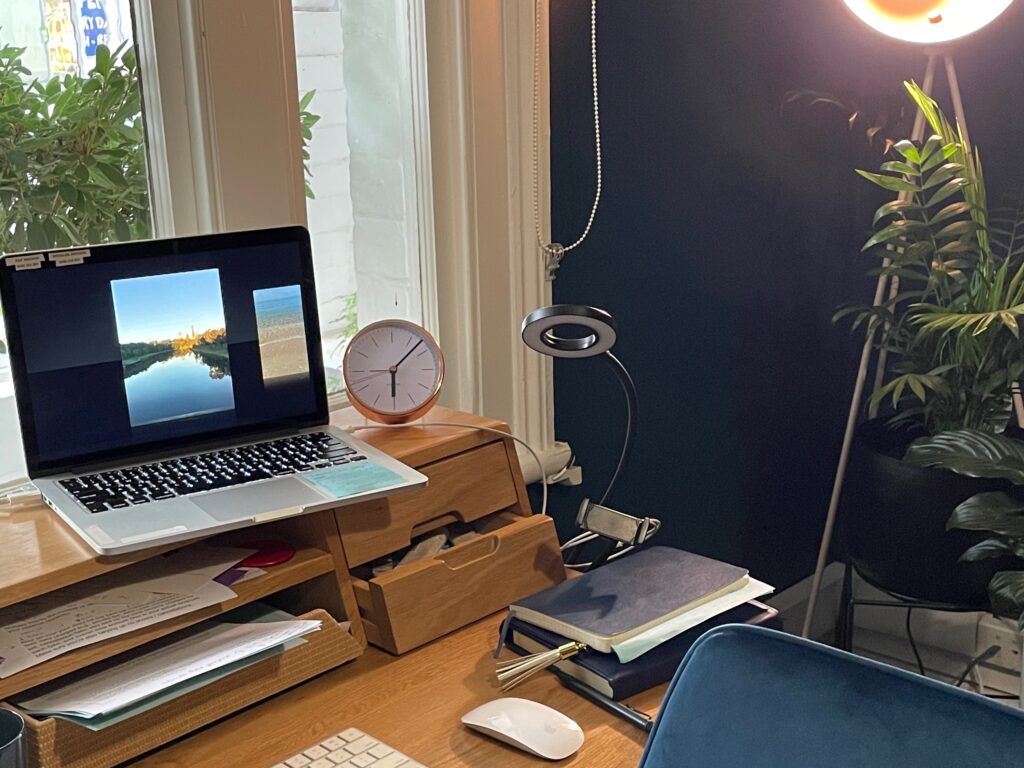
Most discussions of performance focus on what happens in front of others.
The presentation. The meeting. The interview. The competition. The moment of visible evaluation.
Yet a substantial proportion of performance occurs without an audience.
Work completed in solitude.
Decisions made quietly.
Effort sustained without recognition.
Creative or professional development that unfolds out of view.
For individuals who function well in visible roles, these private spaces can become unexpectedly demanding. Motivation can shift. Self-doubt may become more pronounced. Direction can blur. Without external structure or feedback, performance becomes increasingly self-directed and psychologically complex.
This is the domain of performing without an audience.
When performance becomes internal
When others are watching, expectations are often clearer.
Deadlines are visible.
Feedback is immediate.
Effort is externally validated.
In the absence of an audience, these external markers recede. Responsibility for direction, pacing, and evaluation becomes internal. For some, this creates a sense of freedom. For others, it introduces a quieter form of uncertainty and pressure.
Internal questions often begin to surface:
Am I doing enough?
Is this good enough?
Does this matter?
Should this feel easier than it does?
In the absence of external reference points, internal standards begin to take shape. These internal standards can be useful, but they can also become overly demanding or difficult to satisfy. Performance becomes shaped less by external expectation and more by self-criticism.
Over time, this shift from external evaluation to internal monitoring can subtly alter how effort, progress, and competence are experienced.

The shift from external pressure to self-pressure
Public performance is often associated with anxiety. Yet private performance generates its own form of pressure. Without an audience, the mind frequently becomes both performer and evaluator.
Research on self-evaluation, self-criticism, and motivation suggests that internal standards can become more rigid in the absence of external feedback. When outcomes are unclear or delayed, self-criticism often increases and motivation can fluctuate.
In this context, the way individuals relate to themselves internally becomes especially important. Research on self-compassion suggests that a less punitive and more balanced internal stance can support sustained motivation and psychological wellbeing over time. Kristin Neff’s website provides a curated list of research articles on self-compassion and related outcomes.
In these contexts, performance is no longer driven primarily by deadlines or observation. Instead, it becomes shaped by:
- personal expectations
- values
- internal standards
- anticipated outcomes
This can create a subtle but persistent form of pressure. Not the acute pressure of being watched, but the ongoing pressure of holding responsibility for one’s own direction.
When motivation fluctuates
In contexts where effort is largely private, motivation tends to fluctuate. This is both normal and predictable.
Motivation is influenced by multiple factors, including:
- clarity of purpose
- perceived progress
- emotional state
- level of uncertainty
- connection to values
When effort is sustained privately over extended periods, fluctuations in motivation are inevitable. In the absence of immediate feedback, these shifts can easily be interpreted as evidence that something is wrong or that progress has stalled.
More often, they reflect the natural variability inherent in any prolonged period of private performance. Recognising this can reduce the tendency to treat fluctuating motivation as a problem requiring immediate correction.

The role of values in private performance
When no audience is present, values often become the most reliable source of direction.
Values differ from goals.
Goals can be completed or evaluated.
Values provide ongoing orientation.
In private performance settings, values help answer questions such as:
Why does this matter to me?
What kind of person do I want to be in this process?
What do I want my effort to represent?
Research across behavioural and clinical psychology highlights the role of personal values in sustaining meaningful action, particularly when motivation fluctuates or outcomes remain uncertain.
When effort is anchored in values rather than solely in outcomes, it becomes easier to continue through periods of low visibility or limited feedback. A values-based orientation supports ongoing engagement and helps maintain direction when external validation is limited.
This focus on values and internally guided performance is central to my work with adults navigating anxiety and performance pressure, where the aim is to support sustained engagement and thoughtful decision-making over time.
Working without constant validation
Many professionals are accustomed to regular feedback. In its absence, the mind begins to generate its own assumptions:
If no one comments, perhaps it is not good enough.
If progress is slow, perhaps I am not capable.
If effort is not visible, perhaps it does not count.
These interpretations are rarely accurate, but they are understandable. Human beings are highly responsive to recognition and connection. When these are reduced, internal narratives readily fill the space.
Developing the capacity to continue without constant validation is a psychological skill. It involves:
tolerating ambiguity
maintaining direction
recognising incremental progress
cultivating a more supportive internal dialogue
These capacities can be developed intentionally rather than left to chance.
For professionals whose work carries responsibility or complexity, much of performance unfolds outside visible moments of evaluation. Decisions are made without immediate feedback, and progress is often slow or difficult to measure. In these contexts, the ability to sustain direction privately becomes as important as performing well publicly.
This quieter form of performance rarely attracts attention, yet it shapes professional confidence and direction over time.

Performing without an audience in professional life
Private performance extends across many areas of adult life.
Professional contexts:
preparing for career transitions
developing new skills
managing complex responsibilities
working toward long-term projects
Social and personal contexts:
navigating relationships
making value-based decisions
building confidence
managing uncertainty about the future
Across these domains, effort often unfolds long before outcomes are visible. Progress may be gradual, uncertain, or difficult to measure. In the absence of immediate feedback, individuals must rely increasingly on internal sources of direction and evaluation.
The capacity to sustain direction privately therefore becomes central to both performance and psychological wellbeing. It shapes how people persist, adapt, and continue to engage with what matters over time, particularly when external recognition or reinforcement is limited.
Research on motivation and self-regulation highlights the role of internal drivers in sustaining effort and goal-directed behaviour over extended periods, especially when feedback or reward is delayed. You can read an accessible overview of this research here:
https://pmc.ncbi.nl≤≥µ≥m.nih.gov/articles/PMC9340849/
Much of adult competence is developed in these quieter, less visible periods of sustained effort.
Building capacity for private performance
The aim is not to perform constantly or perfectly.
It is to build the capacity to continue with clarity and intention when no one is watching.
This may involve:
- clarifying personal values
- setting realistic internal expectations
- recognising effort rather than only outcomes
- allowing motivation to fluctuate without over-interpreting it
- developing a more supportive internal dialogue
Over time, confidence in private performance grows not from visibility, but from repeated experiences of continuing without immediate recognition or feedback. It develops through sustained engagement rather than moments of external validation.
These capacities rarely emerge through insight alone. More often, they take shape gradually through experience, reflection, and continued participation in what matters.

If this resonates
Many high-functioning professionals find that performing without an audience can become unexpectedly demanding. Without clear feedback or visible markers of progress, effort can gradually become shaped by self-doubt or internal pressure.
Psychological work in this area often focuses on strengthening clarity, self-trust, and more supportive internal frameworks within these quieter spaces of performance.
If you recognise aspects of your own experience here and would like to explore this further, you are welcome to get in touch to learn more about working together.
Published February 2026
