
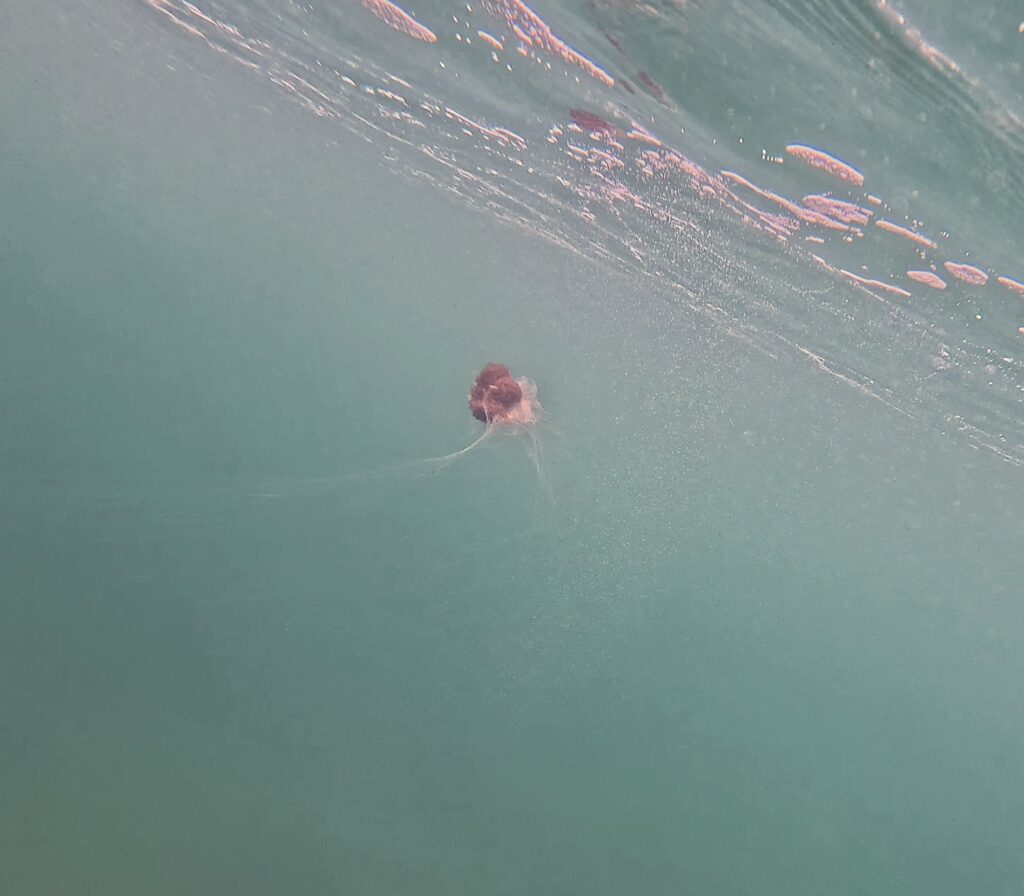
The Psychology of What We Cannot See
Human beings are highly responsive to uncertain threat. When information is incomplete, the mind tends to fill the gaps. From an evolutionary perspective, this makes sense. Overestimating danger has historically been safer than underestimating it.
Research consistently shows that uncertainty can heighten anxiety more than known negative outcomes. This is often referred to as intolerance of uncertainty. When a threat is visible and defined, the nervous system can respond and then settle. When a threat is possible but not confirmed, vigilance is maintained. The system stays activated.
In murky water, the mind does what it is designed to do. It scans. It anticipates. It imagines.
This psychological pattern extends well beyond the water. It appears wherever uncertainty and significance meet.
It may arise while waiting for medical answers.
In performance situations where outcomes matter.
In difficult conversations that carry weight.
In waiting for news or results.
In moments when something important matters deeply but cannot be fully controlled.
In these contexts, the mind moves ahead of the present. It imagines, anticipates, and attempts to prepare. Attention narrows. Possibilities are mentally rehearsed. The nervous system responds to what might happen, not only to what is happening now.
When uncertainty remains and control is limited, vigilance often persists even in the absence of immediate threat.
Anticipatory Anxiety and the Pull Toward Avoidance
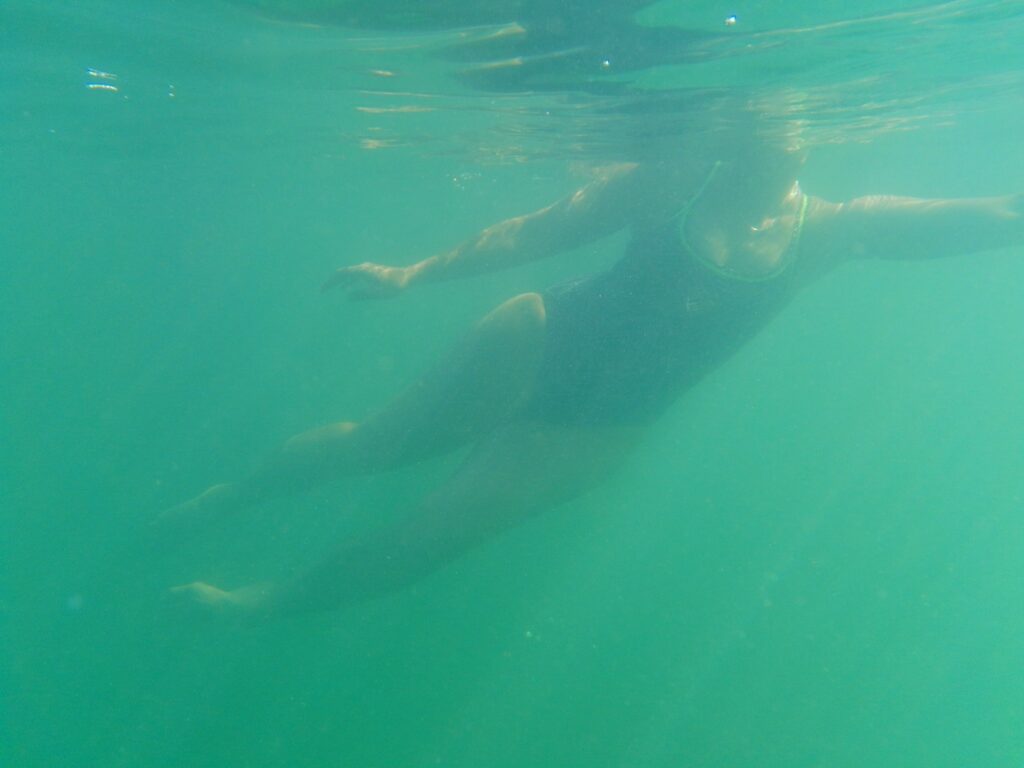
Anticipatory anxiety often creates more distress than the event we fear. The body mobilises. Attention narrows. The mind rehearses possible scenarios.
A natural response is to move away from what feels uncertain or potentially threatening. Avoidance reduces anxiety in the short term. It provides immediate relief and a sense of safety.
But over time, persistent avoidance tends to shrink life. Activities become narrower. Decisions become more cautious. The range of what feels manageable reduces.
The aim is not to eliminate anxiety. Some risks are real and worth respecting. What matters is learning to distinguish between responses that support us and those that gradually narrow our lives by pulling us away from what matters.
Continuing With Awareness

Swimming while knowing jellyfish may be present requires a particular kind of attention. It is not reckless persistence. It is not denial. It is measured continuation.
Awareness increases.
Scanning becomes more intentional.
Pacing may adjust.
But the activity continues.
This reflects psychological flexibility. Psychological flexibility involves the capacity to remain in contact with the present moment and to continue engaging in valued activities even when discomfort, uncertainty, or fear is present. This is a core focus of my work with adults navigating anxiety and performance pressure.
It is not the absence of anxiety that allows movement forward.
It is the willingness to move with anxiety present.
Most meaningful parts of life carry some degree of uncertainty:
relationships
creative work
professional exposure
physical challenge
visibility and reputation
If we wait until everything feels completely safe and predictable, many valued experiences remain out of reach.
Living Well With Uncertainty

The question becomes less about how to eliminate uncertainty and more about how to live well alongside it.
This might involve:
acknowledging risk without amplifying it
strengthening tolerance for ambiguity
focusing attention on what is actually happening rather than what might happen
continuing with care in the direction of what matters
Over time, the nervous system learns that uncertainty can be present without catastrophe following. Confidence rarely comes from certainty. It develops through repeated experiences of coping.
The aim is not fearlessness.
It is capacity.
Capacity to feel alert without becoming overwhelmed.
Capacity to continue without losing balance.
Capacity to hold awareness and still move forward.
Closing Reflections
Swimming in unclear water with the possibility of jellyfish nearby is a small, contained example of a much broader psychological task.
Much of life unfolds in conditions that are not fully predictable. There are few guarantees. Many outcomes remain uncertain.
Yet people continue to build relationships, pursue meaningful work, create, perform, and care deeply about what they are doing.
Not because uncertainty disappears.
But because what matters to them remains clear enough to keep moving toward.
Living well rarely requires certainty. It requires capacity, clarity, and support when needed.
If this resonates...
You might recognise some of these patterns in your own life.
Many people find themselves trying to resolve uncertainty before moving forward, only to feel increasingly constrained by it.
Psychological work often involves building the capacity to live, decide, and act with greater steadiness even when outcomes cannot be fully known.
If this is something you are navigating, you are welcome to get in touch here to learn more about working together.
