
The Psychology of Bike Racing — Part 1 of 3
First published February 2018. Updated December 2025 to reflect current performance psychology and nervous system–informed approaches.
This article explores the psychology of bike racing, including how pressure, physiological arousal, and attention shape performance in competitive cycling.
This series of articles was inspired by conversations with women who are relatively new to racing, as well as discussions within SheRACE, a community dedicated to encouraging and supporting women in competitive cycling.
While I no longer race competitively, the psychological patterns explored here continue to show up consistently in my clinical work with endurance athletes and high-performing professionals.
Why this series exists...
Pressure and performance in bike racing are closely linked, particularly in situations where attention narrows and physiological arousal increases. Bike racing places unique psychological demands on riders. It requires sustained physical effort, rapid decision-making, tolerance of discomfort, and the ability to perform under visible pressure.
For many riders, performance isn’t limited by fitness or skill alone. It’s shaped by how the nervous system responds to pressure, uncertainty, and comparison—often long before the start line.
My Story: From Riding for Fun to Racing Under Pressure
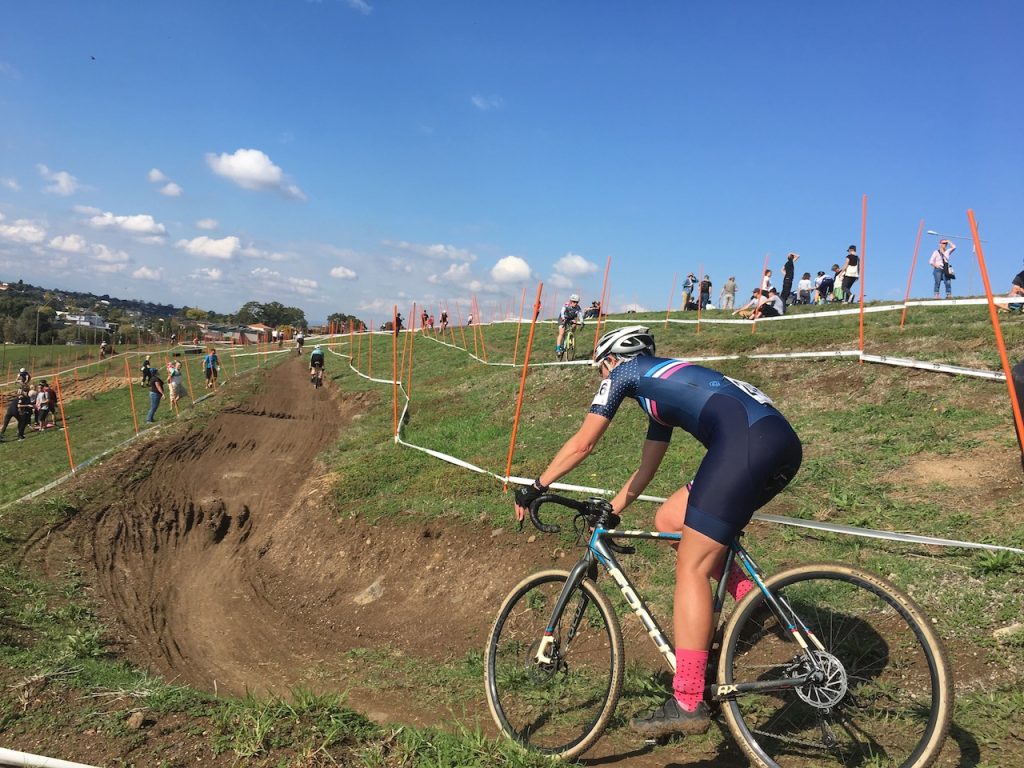
So here’s a little picture of my cycling history. Like many, I grew up riding a bike. Riding was fun, it was transport, and it was part of my first job. I stopped riding shortly after I got my driver’s licence… it seemed easier to drive, and I could travel further distances by car.
I returned to cycling in my late twenties because I wanted to get fitter and healthier. I began riding short distances, then longer distances, and eventually started riding with bunches. I was often dropped and could have been discouraged, but I kept going back. Over time, I stayed with the bunch for longer, and eventually I was able to ride at the front and reach the café at the same time as the guys.
Cycling became addictive… maybe it was the endorphins, the adrenaline, the camaraderie, the friends made, the café stops, or the increased fitness. For me, it was all of these. I started to feel good about myself and noticed a clear improvement in my mood. Cycling became part of my life and part of my repertoire of self-care behaviours; it helps me be the best person and the best psychologist I can be.
Racing, Pressure, and the Mental Side of Performance
I was eventually tempted into racing, and I raced for about 13 years. I competed on the track and on the road, and later tried cyclocross. I enjoyed criterium racing for its fast pace, time trials because it was just me and the clock, road races for the challenge, and cyclocross because it was simply fun.
Racing, however, is hard work. I can’t remember how many times I struggled, was dropped, and finished on my own, off that back. There were races where officials told me I couldn’t finish, and others where I chose to pull out because I was so far behind. I remember days when I felt horrible and didn’t want to race again.
But I kept coming back.
I was dropped less often, then finished closer to the front, then I won a few races. I was moved into a higher grade and the cycle began again – getting dropped, finishing solo, then gradually improving. It still happens. Sometimes I’m dropped, sometimes I don’t finish, and yet I still seem to line up at the next race.
As I became more competitive (I’ve probably always been competitive, it just became more visible), my head sometimes got the better of me. My limitations weren’t my strength, my breathing (despite an asthma diagnosis), or my skills; my limitations were psychological.
There were times when fitness played a role, but more often it was where my head was at during training or racing that had the biggest impact on my results. I know I’ve talked myself out of stronger performances on climbs. I know I’ve talked myself into doing too much work in criteriums or road races because of how I was thinking about myself in the moment.
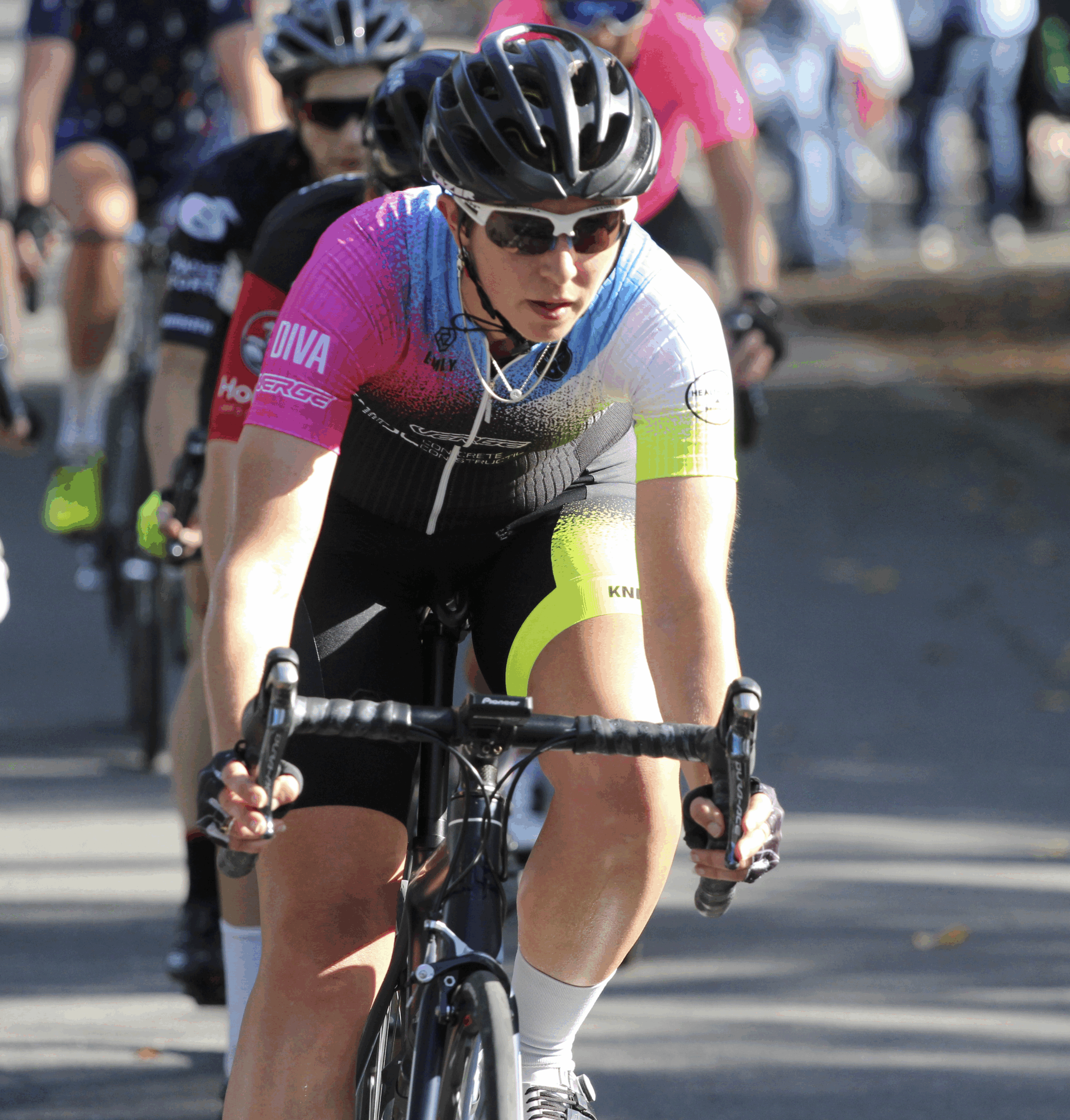
Why Attention and Arousal Matter in Racing
How I think about my performance, and where I place my attention in the lead up to and during a race, has a significant impact on both my performance and my enjoyment of the event. Racing can be demanding, often relentlessly so, but the internal state we bring to a race, and how we respond under pressure, shapes what we’re able to access physically and mentally.
There are a number of factors that influence how a race unfolds. Some are within our control, and others are not. Understanding the difference between the two can help reduce unnecessary stress and support more adaptive performance.
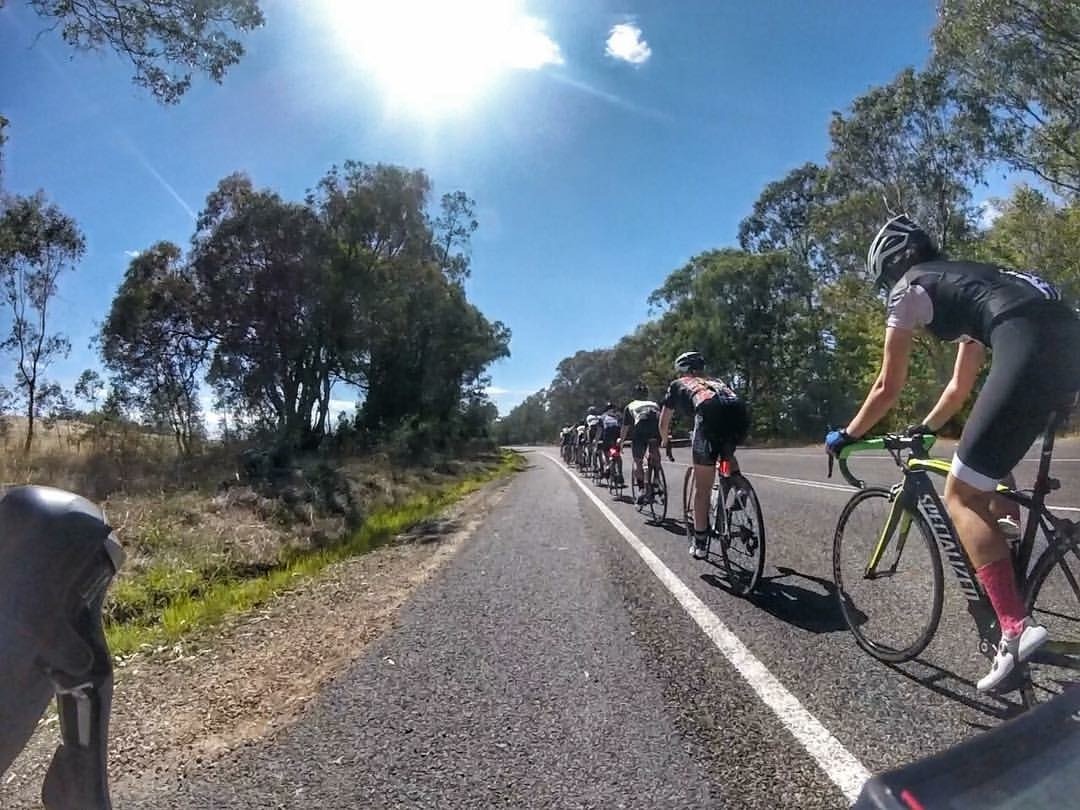
What’s In — and Out — of Our Control in Racing
There are many factors that shape how a race unfolds.
Outside our control:
- weather conditions
- road surface and terrain
- other riders’ skills and behaviour
Within our control:
- preparation and fitness
- your own skills & the strategy
- how we relate to our thoughts and physiological responses
Performance is influenced not just by what happens, but by how the nervous system interprets and responds to what happens.
Taking Control of Event-Specific Skills and Strategy
Preparation involves more than fitness alone. Event-specific skills and strategies play an important role in how the nervous system responds under pressure.
For example, entering a time trial on a new bike brings technical and physical demands. Knowing how to change gears smoothly, how to position your body comfortably, and how to pace effort across the course are learnable skills. Practising these in training reduces uncertainty and cognitive load on race day.
Training programs build the fitness required to sustain effort, while strategy, such as pacing decisions across a course, supports consistency rather than reactivity. Coaches can play an important role here by helping athletes develop event- and sport-specific skills, strategies, and preparation that reduce uncertainty on race day. When skills and strategies are familiar, attention is freed up to respond adaptively to the demands of the event.
Mindset, Arousal, and Performance Under Pressure
Mindset is not just about thinking positively. It’s about where attention goes under pressure and whether physiological arousal stays within a range that supports performance.
When arousal escalates beyond what the system can manage, attention narrows, breathing changes, and coordination suffers. This can happen in racing, public speaking, meetings, or exams.
When Thoughts Interfere with Performance
Thoughts don’t interfere with performance because they are “wrong” or because we lack confidence. They interfere when they signal that the nervous system has shifted into a protective state.
This can happen in racing, event participation, work settings, or social situations.
If we walk up to a start line focused on how fast our competitors are, or how under-prepared we feel, this shapes our physiological and cognitive responses. The same pattern occurs when we approach a presentation or meeting while comparing ourselves to others or questioning our legitimacy.
Common signs of this shift include:
heart rate rising earlier or more sharply than expected
shallow or disrupted breathing
shaking hands or difficulty with fine motor control
trouble settling at the start
difficulty focusing on the task at hand
Alongside these changes, familiar thoughts often appear:
“I can’t do this.”
“I’m not good enough.”
“Everyone else is faster, smarter, or more capable.”
“I’m too slow.”
“I’m a fraud.”
“I’m going to miss a corner, word, or movement.”
“It’s windy; I’m going to be blown off my bike.”
“They’re all going to pass me.”
These thoughts aren’t the problem to eliminate. They’re indicators that the system is under pressure.
What Comes Next
Recognising when thoughts and physiological responses begin to interfere with performance is an important first step, but it’s rarely enough on its own. Most people can identify unhelpful thoughts and still feel stuck when pressure rises.
The next article in this series explores what to do when you notice these patterns in real time: how to support the nervous system, work with physiological arousal, and stay engaged with the task at hand rather than being pulled into self-criticism or threat responses.
If you’re navigating performance pressure, in sport, work, or other high-stakes settings, and would like support in understanding and responding to these patterns, you’re welcome to get in touch. Psychological support can help you build steadiness, adaptability, and a more sustainable approach to performance under pressure.
This article is Part 1 of a three-part series on the psychology of bike racing.
The next article focuses on preparation and reducing uncertainty before events:
Preparing for Bike Racing: Reducing Uncertainty and Performing Under Pressure.
If performance pressure, self-doubt, or physiological responses under stress are affecting how you perform or recover, psychological support can help. You’re welcome to get in touch to explore how this work might apply to you.
