
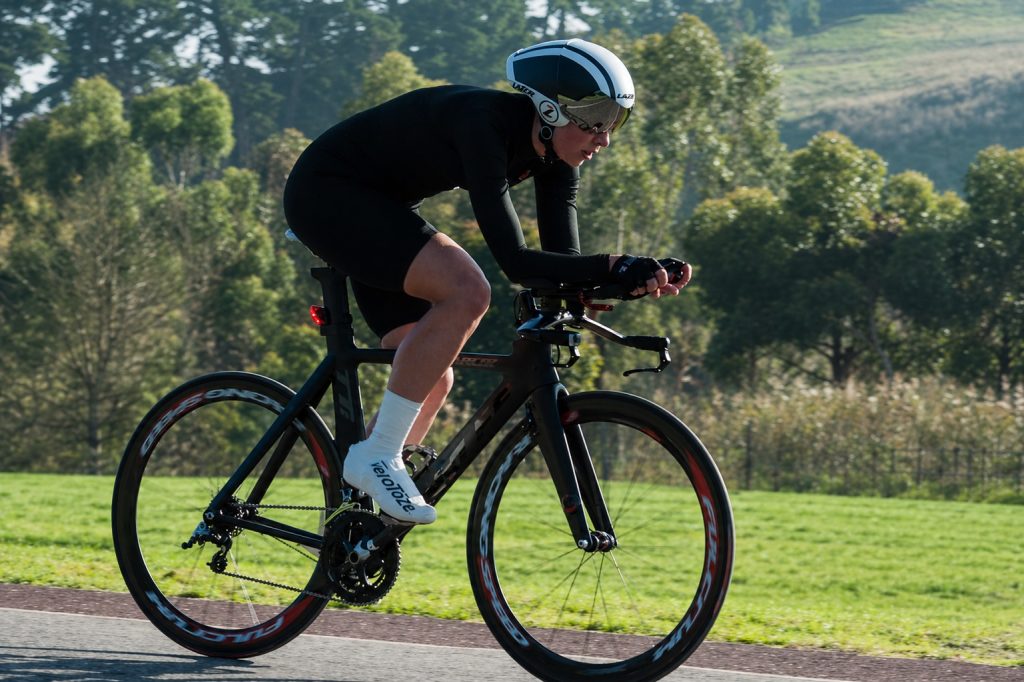
As a psychologist who spends time on the road as well as in the therapy room, I’ve had my own encounters with performance anxiety.
Whether preparing for a race or stepping into another form of pressure, the experience is familiar. That sense of apprehension can build as the moment approaches, particularly when something feels important or carries meaning.
Performance anxiety is not a sign of weakness. It is a natural response when we are asked to perform, respond, or deliver under pressure.
A certain level of activation can support performance. But when it intensifies, it can begin to interfere with how we think, where our attention goes, and how we respond.
This article takes a closer look at what is happening in those moments, and how to work with performance anxiety while it is present.
Working with performance anxiety in the moment
Performance anxiety is often approached as something to reduce or overcome.
In practice, it rarely works that way.
When something matters, the system mobilises. Heart rate increases. Attention sharpens. Thoughts become more urgent. The body prepares for action.
Rather than viewing this as something to eliminate, it can be more useful to understand what is happening and how it influences performance in the moment.
This article focuses on what unfolds under pressure, particularly how physiology, attention, and meaning interact.
Interpreting what you feel under pressure
On a bike, the moment before a race begins is rarely calm.
There is tension in the body. A sense of anticipation. Awareness of others. Awareness of self.
What often shifts in these moments is not just how the body feels, but how those sensations are interpreted.
It is easy to read this as a sign that something is wrong, or that performance may be affected.
An alternative is to recognise these responses as the system preparing to respond, even if the experience itself feels uncomfortable.
These shifts in interpretation are closely linked to what happens more broadly under pressure.
For a broader understanding of how performance anxiety develops, see:
https://enhancelife.com.au/performance-anxiety/
What actually happens under pressure
Physical responses increase
Heart rate, breathing, muscle tension and adrenaline all increase.
This can feel like loss of control, but it is more accurately increased readiness for action.Heart rate, breathing, muscle tension and adrenaline all increase.
This can feel like loss of control or instability, particularly if the sensations are unfamiliar or more intense than expected.
In practice, this reflects increased readiness for action. The body is preparing to respond, even if the experience itself feels uncomfortable or difficult to interpret.
Attention narrows and turns inward
ocus can become rigid or overly self-conscious:
- monitoring technique too closely
- scanning for mistakes
- comparing performance to others
Attention shifts from task engagement to self-evaluation, often without noticing it has happened.
A more mindful awareness of attention can be useful here.
Not as a way of trying to calm the system, but as a way of noticing when attention has shifted and bringing it back to where it is required in the moment.
Under pressure, attention will move. The skill is not to hold it perfectly steady, but to recognise when it has narrowed or turned inward, and to bring it back to what is actually happening.
If this pattern is familiar, it often connects with self-critical thinking.
Meaning shifts
Thoughts can become more absolute, often taking forms such as:
- This matters too much
- I can’t afford to get this wrong
- This says something about me
As this happens, these thoughts can start to feel more certain and more important.
The situation begins to take on more meaning, and performance can start to feel as though it reflects something broader about competence or outcome.
It becomes harder to stay connected to the task, as attention is drawn toward what the moment represents rather than what it requires.
Why trying to calm down can work against you
Many approaches to performance anxiety focus on reducing symptoms. And in some situations, that can be helpful.
But when pressure is already present, attempts to control anxiety can increase monitoring of internal experience and pull attention away from the task.
The focus shifts toward how am I feeling? or am I getting this under control?, rather than what the situation requires.
This often creates a cycle where the effort to manage the experience begins to interfere with performance itself.
Staying engage under pressure
From control to task focus
Rather than trying to reduce anxiety, it is often more helpful to direct attention toward the task itself.
This involves recognising when attention has moved toward trying to control how you feel, and gently returning it to what is required in the moment.
The emphasis becomes less about managing internal experience and more about continuing to respond effectively.
This is closely related to developing distress tolerance.
From internal monitoring to external engagement
Under pressure, attention often turns inward. There can be increased awareness of thoughts, sensations, and perceived mistakes.
While this is understandable, it can interfere with performance if attention becomes overly self-focused.
Shifting attention outward, toward the environment, the task, and what is unfolding in real time, supports more effective responding.

This can be developed further through a more structured approach to preparing for high-pressure moments.
From threat to direction
When pressure increases, situations are often interpreted in more rigid or absolute ways, as though there is little room for error.
This can narrow behaviour and increase hesitation or overcorrection.
Shifting attention toward what matters, and how you want to respond, allows behaviour to remain more flexible under pressure.
This is closely related to how values shape performance.
Staying responsive under pressure
Cycling offers a useful illustration, but it is not unique.
Riding in a fast-moving group requires constant adjustment. Position changes, pace shifts, and small decisions need to be made in real time.
When attention turns inward, toward discomfort or self-evaluation, it becomes harder to respond effectively. When attention stays connected to the environment, movement tends to remain more fluid and responsive.
The same applies outside of sport. The same applies outside of sport, where remaining connected to what is happening in the moment supports more effective responding under pressure.
Performance anxiety is not something to eliminate
It is part of performing when something matters.
The aim is not to remove anxiety, but to change your relationship with it.
This involves recognising the experience for what it is, allowing it to be present, and continuing to respond to what is required.
Performance becomes less about feeling a certain way, and more about staying engaged, remaining flexible, and acting in line with what matters.
Working with performance anxiety
If this reflects your experience of performance under pressure, it may be useful to explore this further in a more structured way.
Further information about working with performance anxiety can be found here:
https://enhancelife.com.au/performance-psychologist/
If you are considering support, you are welcome to make contact via the website.
Orignally published in August 2024. Updated May 2026
